by The Cullector Team
The Best Pillows for Side Sleepers: Supportive, Comfortable Picks for Better Sleep
Your pillow does more work than you think — especially when you sleep on your side. Here's how to find the right one.
If you're a side sleeper, you already know that the wrong pillow makes everything worse — you wake up with a stiff neck, a sore shoulder, or that annoying habit of folding your pillow in half just to get enough height. The best pillows for side sleepers aren't just thick; they need to support the gap between your head and the mattress, keep your spine aligned, and hold their shape through the night. That's a surprisingly specific job, and not every pillow is built for it.
To find genuinely good options, we evaluated pillows across five retailers — Layla Sleep, Cozy Earth, Sweet Zzz Mattress, Quince, and The Company Store — looking at loft height, fill material, firmness, cooling properties, hypoallergenic options, and price. The picks below span a range from $49.90 to $171, so whether you're budget-conscious or willing to invest in your sleep, there's a solid option here.
The goal isn't to find the fluffiest pillow or the most marketing-forward one. It's to find pillows that actually do what side sleepers need: keep your head elevated at the right height, reduce pressure on your shoulder, and support your neck without pushing it out of alignment. Here's what we found.
What Should Side Sleepers Look for in a Pillow?
Side sleepers need a pillow with a higher loft — typically 4 to 6 inches — to fill the space between their head and the mattress and keep the spine neutral. Firmness matters too: a pillow that's too soft collapses under the weight of your head, while one that's too firm can push your neck upward. Materials like shredded memory foam, latex, buckwheat, and supportive foam cores are generally well-suited to side sleeping because they maintain shape and provide consistent support through the night.
How We Compared These Pillows for Side Sleepers
We evaluated each pillow based on the criteria most relevant to side sleepers: loft and adjustability, fill material and its support characteristics, cooling properties, hypoallergenic suitability, and price-to-value ratio. Where available, we also considered product descriptions and customer feedback to understand real-world performance. No single pillow will be perfect for every sleeper — body size, mattress firmness, shoulder width, and personal preference all play a role — so we've noted who each pillow is best suited for and where tradeoffs exist.
If you're also rethinking your full sleep setup, our guide to the best mattress toppers covers memory foam, gel, latex, and down alternative options that pair well with a supportive side sleeper pillow.
Layla Sleep offers two distinct pillow materials — shredded memory foam and kapok fiber — both of which are well-matched to side sleeping. The shredded foam option is adjustable and more affordable; the kapok pillow is a natural-fill alternative with a softer, moldable feel. Both are designed with cooling in mind, which matters if you tend to sleep warm.

Shredded Memory Foam Pillow by Layla® [Adjustable & Cooling for Side Sleepers]
This is one of the most practical memory foam side sleeper pillows in this roundup because it's adjustable. It comes overfilled so you can remove shredded foam until the loft feels right for your frame — a real advantage for side sleepers, since the ideal height varies depending on shoulder width and mattress softness. The shredded reactive foam molds to the shape of your head and neck rather than holding a fixed form, which adds a degree of pressure relief. Worth noting: adjustable pillows require a little trial and error upfront, and the foam fill can shift if you move a lot at night. But at $74, it's one of the more accessible memory foam options among these picks and a strong candidate for side sleepers who haven't yet found their ideal loft.
shop
Kapok Cooling Bed Pillow | Layla Sleep®
Kapok is a natural plant fiber with a texture similar to down — lightweight, soft, and breathable — making this a good option for side sleepers who want a more natural fill than memory foam but still need enough loft to support their neck. According to the product description, kapok pillows offer a balance of softness and support that can work for side sleepers, filling the gap between the head and mattress while keeping the spine aligned. The hexagon-textured cover is designed for breathability. One consideration: kapok fill tends to compress more over time than foam or latex, so the loft may decrease with extended use. At $114, it sits in the mid-range for specialty pillows, and is best suited to sleepers who run warm and prefer a natural or plant-based fill material.
shopIf you're unsure what loft height works best for you, start with an adjustable pillow like the Layla Shredded Memory Foam. It lets you dial in the fill before committing to a fixed-loft design.
Cozy Earth focuses on breathable, temperature-regulating sleep products, and their pillow lineup reflects that. Their Bamboo Down Alternative Pillow is a cooling pillow for side sleepers who want a softer, more cloud-like feel without using actual down.

Bamboo Down Alternative Pillow | Cooling | Cozy Earth
This pillow is designed around the idea that you shouldn't have to choose between temperature regulation and comfort. The bamboo-derived materials are associated with breathability and moisture-wicking, which makes this a reasonable pick for side sleepers who tend to overheat at night. The down alternative fill offers a softer, loftier feel compared to foam — it's more forgiving and easier to scrunch or fold if you like to adjust your pillow during the night. The tradeoff is that down alternative fills, even high-quality ones, typically offer less structured neck support than memory foam or latex, so this may be a better fit for side sleepers on the lighter end or those using a firmer mattress that already provides some height compensation. At $128, it's on the pricier side for a down alternative option, but the cooling focus is a genuine differentiator.
shopSweet Zzz takes a natural-materials approach to sleep products. Their Buckwheat Pillow is a firm, moldable option that suits side sleepers who want structured support and aren't bothered by a slightly different feel and sound from a traditional pillow.

Buckwheat Pillow
Buckwheat pillows have a loyal following among side sleepers who need firm, stable support — and this one from Sweet Zzz is a solid entry point into the category. According to the product description, it works well for side sleepers when adjusted to a medium fill level, providing a firmer feel than most conventional pillows. The hulls conform to the shape of your head and neck and hold that position throughout the night without the gradual deflation you might get from foam or down alternative fills. Because the fill is adjustable, you can add or remove hulls to find the right height. The key thing to know upfront: buckwheat pillows have a distinct rustling sound when you move, and they feel noticeably different from foam or fiber fills. They also tend to sleep cooler than foam, since air moves freely through the hulls. At $79.80, this is a firm pillow for side sleepers who prioritize natural materials and consistent support over plush softness.
shopBuckwheat pillows aren't for everyone — but if you've tried standard foam and fiber pillows without success, they're worth considering. The adjustable fill and naturally firm support make them a genuinely different option for side sleepers with neck pain.
Quince is known for offering quality materials at lower-than-expected price points, and their pillow lineup is no exception. Their Premium Down Alternative Pillow is one of the more affordable hypoallergenic side sleeper pillows in this roundup — and one worth taking seriously.
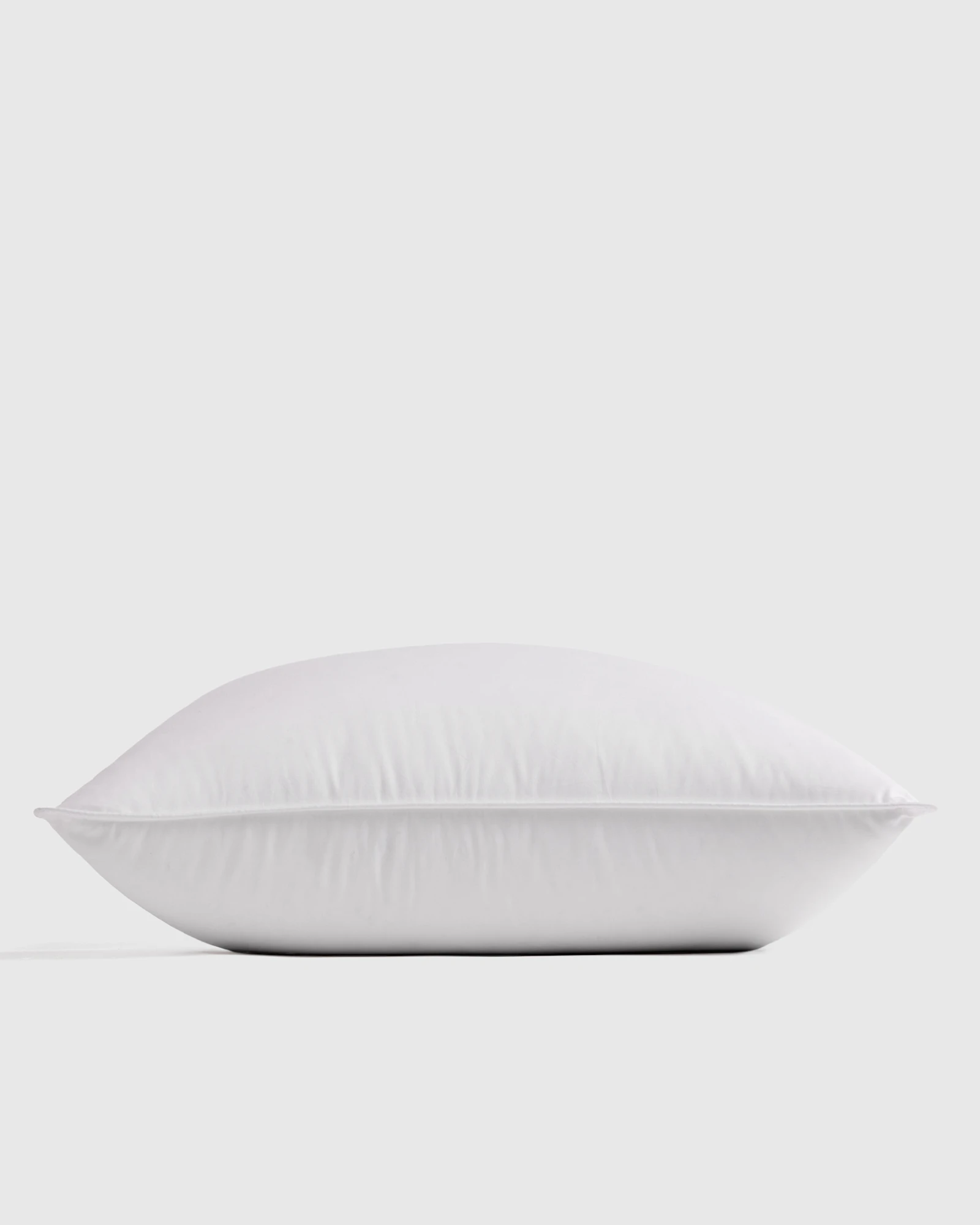
Premium Down Alternative Pillow
At $49.90, this is the most accessible pillow in this guide — and it's specifically described as offering added support for side sleepers. The hypoallergenic microgel fill is designed to mimic the loft and softness of down without the allergen concerns, making it a strong choice for anyone with sensitivities to feathers or dust mites. The firm version (shown) is the right call for most side sleepers, since a softer fill tends to compress too much under the weight of your head. The tradeoff compared to the pricier options in this guide is straightforward: microgel fills don't typically offer the same long-term shape retention as shredded foam or latex, and the loft isn't adjustable. But as a side sleeper pillow under $100 — especially one that leads with hypoallergenic credentials — it's a practical, well-priced starting point.
shopThe Company Store offers some of the most explicitly side-sleeper-focused pillow designs in this guide. Two of their three featured options are engineered specifically for side sleeping geometry, and the third adds a dual-material approach for sleepers who want more options.

Serene™ Foam Hypoallergenic Side Sleeper Pillow - White
This is the most purpose-built side sleeper pillow in this roundup. It's designed with a 2.25-inch gusset — essentially a panel of fabric around the perimeter — which maintains the pillow's height and prevents the edges from collapsing when you press into them. According to the product description, this gusseted construction is specifically intended to reduce strain on the neck and shoulders. It's also hypoallergenic, which makes it a good option if you have sensitivities. The Serene foam material is described as a support-focused option rather than a plush one, so this is a better fit for sleepers who need firm, stable support than for those who like a softer, sink-in feel. At $89, it's competitively priced for a dedicated cervical-support pillow and one of the stronger value picks in this guide for side sleepers dealing with neck discomfort.
shop
Dual Memory Foam and Gel Fiber Pillow - White
This reversible pillow offers two distinct sleep surfaces: one side uses memory foam for contouring support, and the other uses gel fiber for a softer, more cushioned feel. It's a practical option for side sleepers who haven't fully decided what material they prefer, or for those who shift between wanting more structure and more softness depending on the night. The gel fiber side may also run cooler than a solid foam surface. At $64, it's the most affordable option from The Company Store in this guide, and the dual-sided design gives it a degree of flexibility that single-material pillows can't match. One consideration: the pillow is not described as adjustable in loft, so the height is fixed — side sleepers with broader shoulders may want to confirm the loft dimensions before purchasing.
shop
Duo Side and Back Sleeper Neck Pillow
Designed for sleepers who move between side and back positions, this cervical pillow for side sleepers has a contoured shape that supports the natural curve of the neck without requiring you to flip or refold the pillow when you shift positions. According to the product description, the design lets you switch from back to side sleeping seamlessly. The extra support zone at the neck contours to the natural curve of the cervical spine, which may be helpful for anyone who regularly wakes up with neck stiffness. It's worth noting that contoured cervical pillows have a defined shape that works well for many but isn't universally loved — if you prefer a flat or fully moldable pillow, this style may feel restrictive. At $89, it's the same price as the Serene Foam option but is aimed at a slightly different sleeper: one who moves around and needs a pillow that adapts without adjustment.
shopThe Company Store's Serene Foam and Duo Neck Pillow are two of the most explicitly designed options for side sleeping in this guide. If neck support is your primary concern, either of these is worth prioritizing.
Side Sleeper Pillow Quick Comparison: Which One Is Right for You?
Here's a straightforward summary of how each pick compares, based on the criteria side sleepers tend to care about most:
- Best for loft adjustability: Layla Shredded Memory Foam Pillow ($74) — remove fill until the height is exactly right for your shoulder width.
- Best natural fill for cooling: Layla Kapok Cooling Bed Pillow ($114) — plant-based, breathable, and moldable; better for warm sleepers who don't want foam.
- Best for hot sleepers who want softness: Cozy Earth Bamboo Down Alternative Pillow ($128) — bamboo materials are associated with temperature regulation, and the down alternative fill is soft and adjustable in feel.
- Best firm pillow for natural materials: Sweet Zzz Buckwheat Pillow ($79.80) — adjustable, cool-sleeping, and firm; best for those who've found foam and fiber too soft.
- Best hypoallergenic option under $100: Quince Premium Down Alternative Pillow ($49.90) — hypoallergenic microgel fill, side-sleeper-appropriate firmness, and the lowest price in this guide.
- Best purpose-built side sleeper pillow: The Company Store Serene Foam Hypoallergenic Side Sleeper Pillow ($89) — gusseted design specifically engineered to maintain loft and reduce neck and shoulder strain.
- Best for combination side/back sleepers: The Company Store Duo Side and Back Sleeper Neck Pillow ($89) — contoured for cervical support across both positions without needing to adjust.
- Best flexible option at mid-price: The Company Store Dual Memory Foam and Gel Fiber Pillow ($64) — two different sleep surfaces in one pillow, good for sleepers still figuring out their material preference.
Side sleeper pillow height is one of the most overlooked variables in sleep quality. As a general guideline, broader-shouldered sleepers typically need more loft (5–6 inches), while petite sleepers or those using soft mattresses may find 3–4 inches sufficient. If you're prone to waking up with discomfort and your bed setup is otherwise solid, also consider whether your overall sleep environment is contributing — our guide to humidifiers for large rooms and bedrooms covers another often-overlooked factor in nighttime comfort.
A Note on Pillow Care and Longevity
Even a well-chosen side sleeper pillow won't last forever. Most pillows — foam, fiber, and natural fill alike — benefit from regular fluffing, airing out, and washing (where the fill allows). Shredded foam and fiber fills typically compress over time, which means the loft you started with may decrease after months of use. Natural fills like buckwheat and kapok are more stable in terms of shape retention, but they require specific care. Always check the care instructions before purchasing, especially if you're sensitive to allergens — some fills require dry cleaning or spot cleaning only.
As a general rule, most sleep experts suggest evaluating your pillow annually and replacing it if it no longer springs back or holds adequate loft for side sleeping. This is especially important if you're experiencing neck or shoulder discomfort that wasn't present when the pillow was new.
Shopping for better sleep doesn't have to stop with the pillow. Chirpyest brings together curated product picks across home, wellness, and lifestyle categories — all in one place. Browse the full home & garden section for more sleep and bedroom upgrades.
Final Thoughts on the Best Pillows for Side Sleepers
Finding the right pillow as a side sleeper is genuinely worth the effort. The wrong one can contribute to neck pain, shoulder pressure, and restless sleep — problems that tend to get attributed to everything except the pillow. The best pillows for side sleepers in this guide are not all alike: they span different materials, firmness levels, loft adjustability, and price points, which means the right pick depends heavily on your specific needs. If you run hot and want natural materials, the Layla Kapok or Sweet Zzz Buckwheat are worth serious consideration. If you want a hypoallergenic side sleeper pillow at a lower price, the Quince Down Alternative is a practical starting point. And if you want a pillow built from the ground up for side sleeping geometry, The Company Store's Serene Foam and Duo Neck options are the most specifically engineered picks in this roundup. Start with the criteria that matter most to you — loft height, material, cooling, allergen-free design — and let that narrow the field.
Frequently Asked Questions
How thick should a pillow be for side sleeping?
Most side sleepers do best with a pillow loft between 4 and 6 inches, though the right height depends on shoulder width and mattress firmness. Broader-shouldered sleepers typically need more height to keep the spine neutral, while those with narrower frames or softer mattresses may find 3–4 inches sufficient. Adjustable pillows — like shredded memory foam or buckwheat — are a useful option if you're not sure where you fall, since you can remove fill until the loft feels right.
Is memory foam or latex better for side sleepers?
Both can work well for side sleepers, but they feel different. Memory foam conforms closely to the shape of your head and neck, which many side sleepers find comfortable for pressure relief. Latex is generally more responsive — it pushes back rather than sinking in — and tends to hold its loft longer over time. Latex pillows for side sleepers are often recommended for those who find memory foam too slow to rebound or too warm. Neither is universally better; it comes down to personal preference and whether you prioritize contouring or responsiveness.
Can a pillow help with neck pain from side sleeping?
A pillow designed specifically for side sleeper neck support can reduce strain on the cervical spine by keeping the head at the correct height and limiting lateral flexion. Pillows with gusseted edges (like The Company Store's Serene Foam) or contoured cervical designs (like the Duo Neck Pillow) are built to maintain consistent loft and support the neck's natural curve. That said, a pillow alone may not resolve all neck pain — mattress firmness, sleeping posture, and underlying physical issues are also factors. If discomfort persists, consulting a healthcare provider is advisable.
What's the best pillow for side sleepers who sleep hot?
Side sleepers who tend to overheat at night have a few solid options in this guide. The Sweet Zzz Buckwheat Pillow naturally sleeps cool because air circulates freely through the hulls. The Layla Kapok Pillow uses a breathable plant fiber fill and a textured cover designed for airflow. The Cozy Earth Bamboo Down Alternative Pillow uses bamboo-derived materials associated with moisture-wicking and temperature regulation. All three are worth considering over a standard solid-foam pillow, which tends to trap more heat.