by The Cullector Team
Walking Pads That Keep You Moving at Your Desk
How to find the right under-desk treadmill for your space, budget, and work style — with picks from three retailers.
If you've been spending most of your day sitting — and feeling the stiffness, low energy, or mental fog that comes with it — you're not alone. Walking pads have become one of the most practical fitness purchases for desk workers, apartment dwellers, and anyone who wants low-impact movement without dedicating a full room to equipment. The best walking pads under $500 are genuinely compact, quiet enough for video calls, and easy to slide under a bed or couch when not in use. And they've come a long way in both quality and affordability.
We compared walking pads across three retailers — WalkingPad, Walmart, and The Home Depot — evaluating motor power, noise level, weight capacity, folding design, speed range, and overall value for desk workers and home users. Whether you're setting up a walking workstation or just want a portable treadmill for light daily movement, this guide covers options from $134.99 to $449.
Ahead, you'll find a breakdown of what to look for before you buy, detailed product picks at different price points, and honest notes on who each model suits best. For more fitness and health gear worth comparing, Chirpyest's category hub covers a wide range of equipment and wellness picks.
What Are the Best Walking Pads Under $500 for Home and Office Use?
The best walking pads under $500 for home and office use balance a quiet motor (under 50dB is ideal for calls), a folding or slim profile that fits under a standing desk, and a weight capacity that suits your needs — most options in this range support 265–320 lbs. WalkingPad's dedicated models lead on build quality and app integration, while budget-friendly picks from Walmart and The Home Depot offer solid performance at a lower entry price. The right choice depends on how much space you have, how often you plan to use it, and whether you need handrail support for faster-paced walking or light jogging.
How to Choose a Walking Pad: Key Factors to Compare
Shopping for a compact treadmill for small spaces involves more nuance than picking the cheapest option. Here are the criteria worth prioritizing before you buy.
Motor Power and Speed Range
Most walking pads designed for desk use run between 0.5 and 4 mph — enough for a steady walking pace, but not sprinting. Motors in the 2–2.5 HP range handle the load comfortably for continuous walking. If you also want to jog occasionally, look for models that reach 5–6 mph and include a handrail for stability. A brushless motor is worth seeking out: it tends to run quieter and last longer than a brushed motor.
Noise Level
A quiet treadmill for home office use is non-negotiable for most remote workers. Look for specs under 45–50dB — roughly the level of a quiet conversation — if you're planning to use the pad during calls or in an apartment. Product listings sometimes specify decibel levels; when they don't, brushless motors and cushioned belt systems are generally a good indicator of quieter operation.
Folding Design and Storage Footprint
A folding walking pad is the practical choice for anyone without a dedicated home gym. Most walking pads fold flat for under-bed or under-couch storage. Some fold vertically (like the WalkingPad H1), which takes less floor space but requires leaning against a wall. Measure your available storage space before choosing — folded dimensions vary more than you'd expect between models.
Weight Capacity and Belt Width
Weight capacity ranges from around 220 lbs on entry-level models to 320 lbs on higher-capacity options. Belt width matters too: a narrower belt (around 15–16 inches) is fine for walking, but if you're taller or plan to use the machine at faster speeds, a wider belt (17–20 inches) gives more room to stride naturally. Check both specs before buying, especially if you're on the taller side.
Controls and App Connectivity
Most walking pads include a remote control or LED display for speed adjustments. Some, like WalkingPad's lineup, also offer app connectivity — a walking pad with app control lets you track time, steps, distance, and calories from your phone, which is useful if you want to build a consistent movement habit. If you don't care about data tracking, a simple remote and LED readout will serve you just fine.
WalkingPad's dedicated lineup is purpose-built for desk workers and small-space living. Their models feature brushless motors, cushioned belt systems designed to reduce joint impact, and folding designs that store vertically or flat. If you want a portable walking treadmill that feels like it was designed specifically for this use case — rather than a scaled-down gym treadmill — WalkingPad's range is worth the higher price point.

WalkingPad P1 180° Foldable Treadmill | Slim & Quiet
The P1 folds flat to the size of a small suitcase — slim enough to slide under a bed or couch — making it one of the more genuinely portable walking treadmills in WalkingPad's lineup. It uses FootSense technology, which automatically adjusts speed based on your foot position on the belt, so you don't need to fuss with controls while you work. The design is clean and minimal, and the fold-flat profile makes setup and storage fast. Worth noting: the P1 is optimized for walking pace rather than jogging, so shoppers who want to occasionally run should look at the H1 instead.
shop
WalkingPad C2 Foldable Under-Desk Walking Treadmill | Quiet
The C2 is WalkingPad's most capable option in this comparison, powered by a 2.5–4.5 HP brushless motor that according to the brand delivers quiet, consistent performance across long sessions. It includes impact-reducing cushioning designed to protect knees and ankles — a meaningful consideration if you plan to use it for extended periods each day. At $449, it sits at the top of the under $500 range, but the motor rating and joint-protection design make it the stronger choice for daily users who want durability. The trade-off is price: the C2 costs significantly more than comparable models from other retailers at this price tier.
shop
H1 2-in-1 Under-Desk Treadmill | Foldable Handrail
The H1 offers a genuine 2-in-1 setup: fold the handrail up to walk or jog at speeds up to 5 mph, or fold it flat to use as a standard under-desk walking pad. A 2 HP motor powers the belt, and vertical storage means it stands upright against a wall rather than lying flat — useful if under-bed space is limited. It's the most versatile option among WalkingPad's three models here, and at $299 it lands at a competitive mid-range price. The lower motor rating compared to the C2 may be a consideration for heavier users or those planning frequent higher-speed sessions.
shopWalkingPad's models are best suited to shoppers who prioritize build quality, quiet operation, and a design that was purpose-built for desk use — not adapted from a traditional treadmill format. All three options fold compactly, and the H1's 2-in-1 format offers the most flexibility for users who want the option to jog.
Walmart carries walking pads across a wide price range, with several folding and under-desk models available under $200. The three options below represent different approaches — a high-capacity folding model, a slim dual-mode design, and a compact option with handlebar support — making Walmart a useful starting point for shoppers comparing value-focused picks.
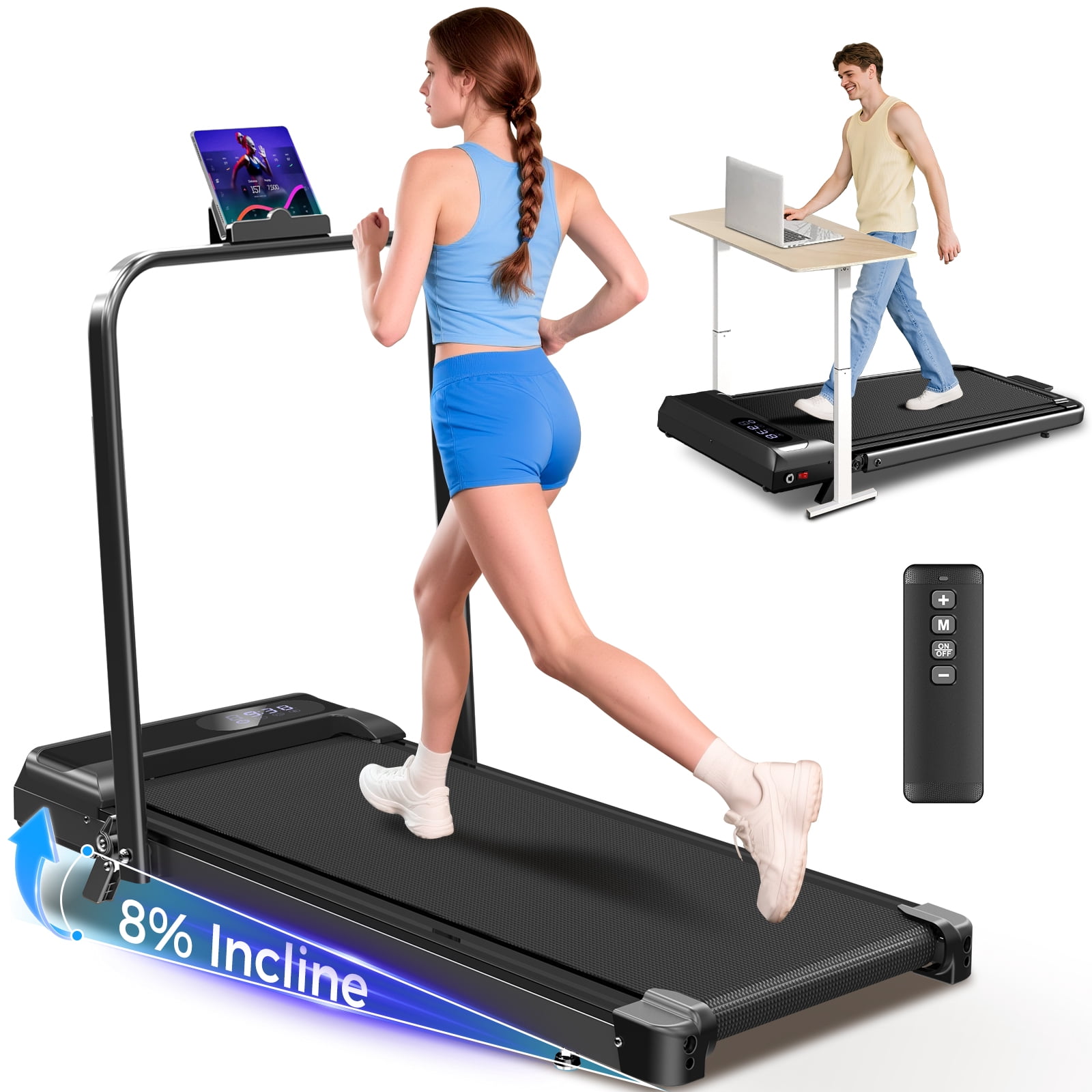
Tomile Walking Pad for Home/Office, Folding Treadmill 2.5HP
The Tomile stands out in this price range for its 320 lb weight capacity — higher than many walking pads at double the cost. It runs on a 2.5 HP motor and comes with a remote control, making it straightforward to adjust speed without bending down. The folding design makes it practical for home office setups where floor space is limited. At $134.99 (down from $149.99), it's the most affordable folding walking pad in this comparison, though shoppers with stricter noise requirements may want to check decibel specs against the quieter WalkingPad models before committing.
shop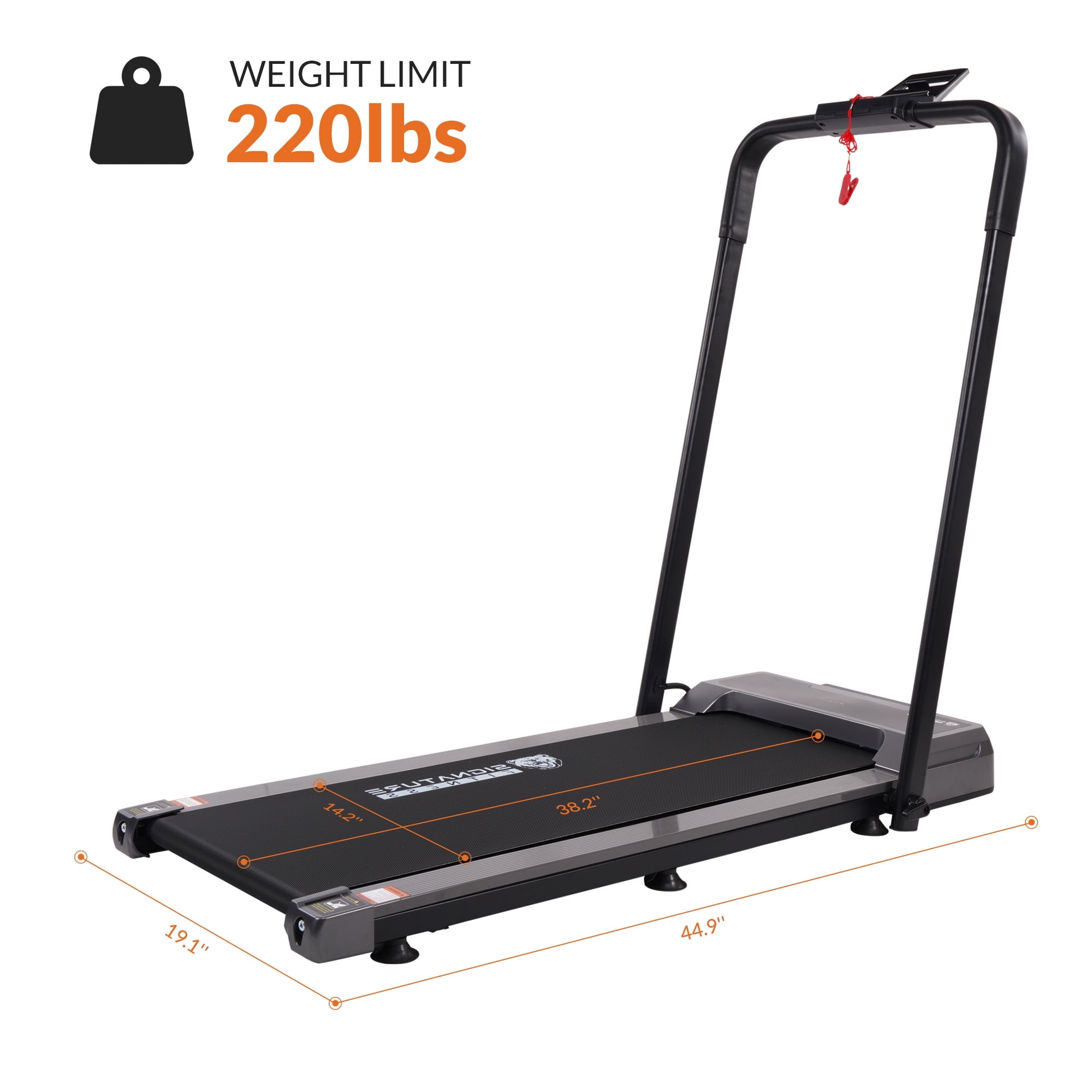
BalanceFrom SlimFold Dual-Mode Walking Pad, Compact Under-Desk
The BalanceFrom SlimFold leans into its space-saving design — the "SlimFold" name refers to its low-profile flat fold, and transport wheels make it easier to reposition without lifting. It includes a remote control and is described as a quiet walker suited for home or office use. The dual-mode format means it can function as a standard under-desk pad or with slightly more active use when the configuration changes. At $199, it falls between the budget Tomile and the mid-range WalkingPad H1, making it a reasonable consideration for shoppers who want a compact treadmill for small spaces without reaching the $300+ tier.
shop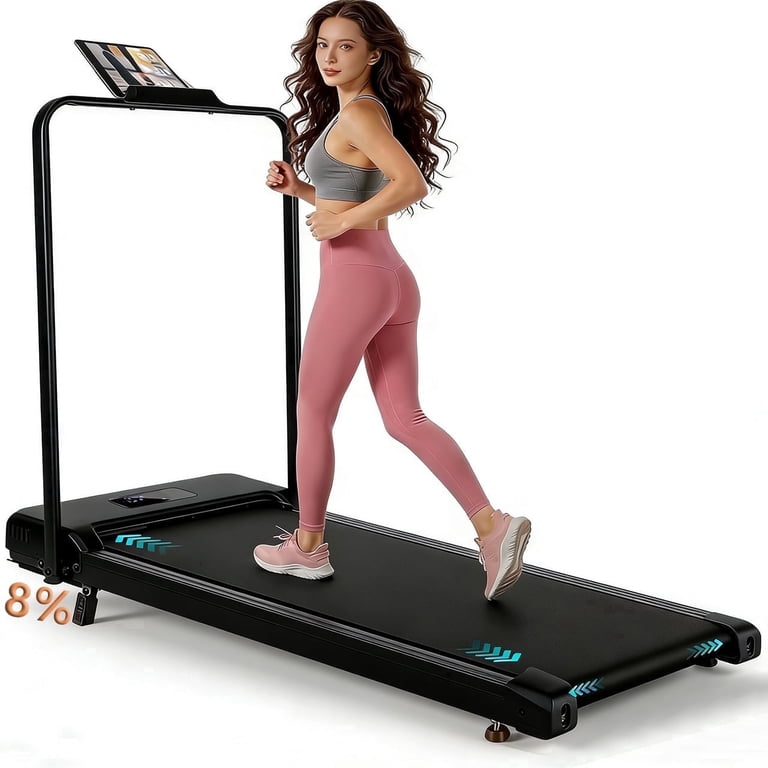
Simpfree Walking Pad with Handle Bar and Adjustable Speed
Equipped with a 2.5 HP motor and operating at under 45dB according to product information, the Simpfree is among the quieter options available at this price point — making it a worthwhile consideration for apartment users or anyone on video calls regularly. It supports up to 300 lbs, folds in roughly 2 seconds according to the listing, and includes an LED touch screen, remote, and compatibility with a watch monitor. Speed range runs from 0.6 to 7.5 mph, which gives it broader range than pure walking-only models. The handlebar adds stability for faster-paced sessions. At $134.99, it offers a notable feature-to-price ratio among walking pads for desk workers.
shopWalmart's selection makes the most sense for shoppers focused on value — particularly the Simpfree and Tomile, which both come in under $140 while offering competitive capacity and motor specs. The BalanceFrom SlimFold is worth comparing if you want a more streamlined design at a mid-range price.
The Home Depot has expanded beyond home improvement into fitness equipment, and their walking pad selection includes several under-desk and portable treadmill options in the $175–$230 range. All three models below are 2-in-1 designs with folding capability, making them usable both as standing desk companions and for more traditional walking sessions.
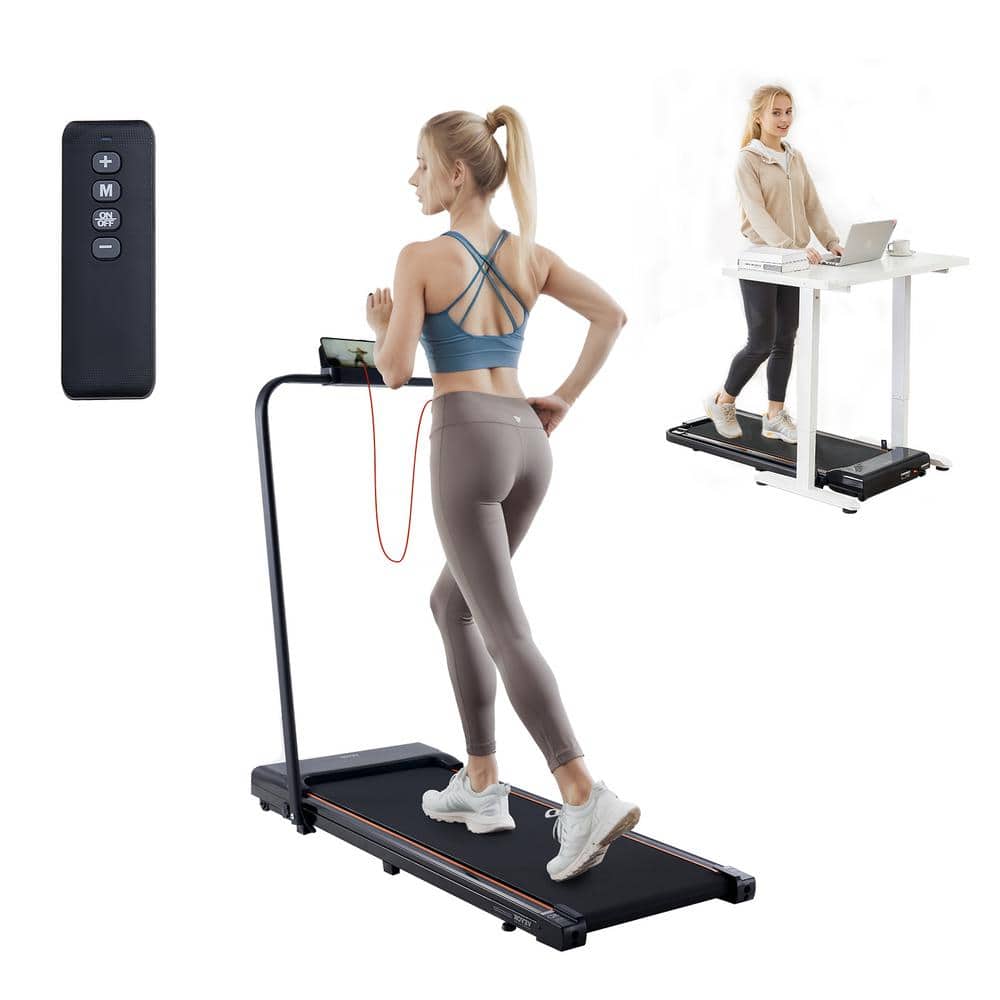
VEVOR 2.5 HP 2-in-1 Portable Pad Walking Pad Under Desk Treadmill
VEVOR's 2-in-1 walking pad runs on a 2.5 HP motor and supports up to 265 lbs, with a folding design that transitions between under-desk walking mode and a more upright treadmill configuration. It's positioned as both a working and running option, giving it more versatility than pure walking-only models. At $184.99, it sits between the most affordable Walmart options and the mid-range WalkingPad models, and the 265 lb capacity is reasonable for most users. Worth checking: folded dimensions before purchase if storage space is a constraint.
shop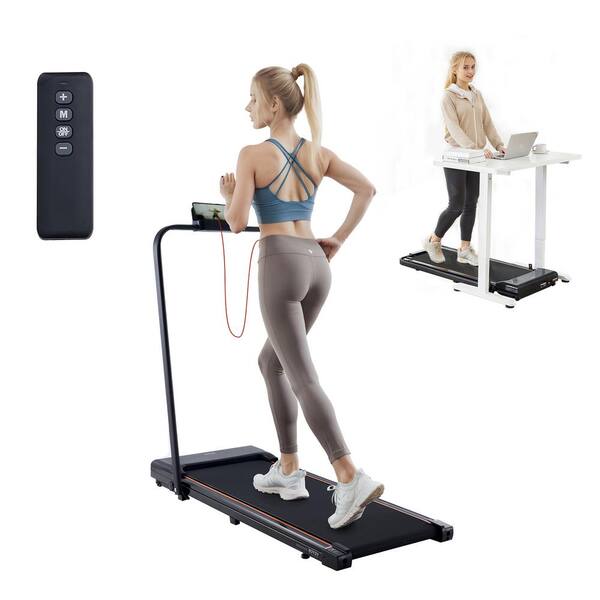
Tatayosi 2-in-1 Walking Pad, Under Desk Treadmill, 2.5 HP Ultra Quiet Brushless Motor
The Tatayosi distinguishes itself with a brushless motor — a feature more commonly found on higher-priced models — which according to the product listing runs ultra-quietly and supports a 265 lb capacity. Brushless motors generally run cooler and quieter than brushed alternatives, making this a notable spec for anyone prioritizing noise level during work hours. At $230 it's the priciest option among The Home Depot's picks here, but the brushless motor spec puts it closer to WalkingPad territory in terms of the technology used. Best suited to shoppers who want a quieter under-desk treadmill at a mid-range price without going to a dedicated walking pad brand.
shop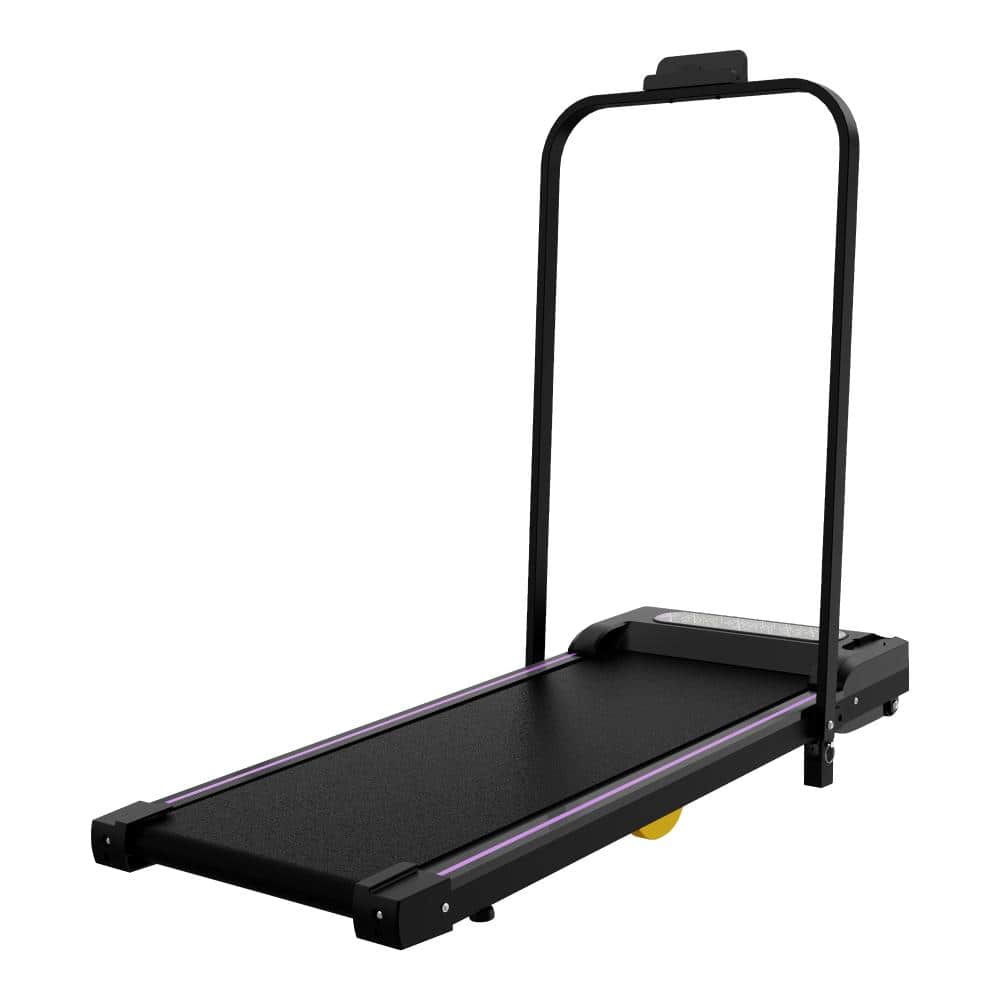
Sudzendf Black 2 in 1 Portable Treadmill, Under Desk Walking Pad with Handle Remote Control LED Display
The Sudzendf offers a 2-in-1 format with a fold-down handle for standing use and a remote control for speed adjustments — a practical combination for home office setups where you're frequently switching between sitting, standing, and walking. An LED display shows workout data at a glance. At $176.88, it's the most affordable of The Home Depot's three options here and includes pickup availability. It may suit shoppers who want a handlebar option without spending $230 or more, though buyers should verify noise specs if quiet operation is a priority.
shopThe Home Depot's range works well for shoppers who want a 2-in-1 under-desk treadmill at a middle price point — generally $175–$230 — and prefer the option of in-store or curbside pickup. The Tatayosi's brushless motor is the standout spec in this group for noise-conscious buyers.
Walking Pad vs. Traditional Treadmill: What's the Difference?
A walking pad is a category of treadmill specifically designed for walking pace, compact storage, and quiet operation — making it distinct from traditional full-size treadmills built for running. Most walking pads have a lower profile, a shorter belt, and a lower maximum speed (typically 4–6 mph versus 10–12 mph on a running treadmill). They're also significantly lighter and easier to store, which is the main draw for apartment dwellers and home office users.
The trade-off is capability: if you want to run at speed or train for distance with proper form, a traditional treadmill will serve you better. But for low-impact daily movement — the kind that breaks up hours of sitting without interrupting your workflow — a walking pad is purpose-built for exactly that. Pairing a walking pad with a standing desk converter turns a passive workday into one with meaningful daily step counts. If you're also investing in your home setup, the home and garden category hub covers furniture and organization picks worth exploring alongside fitness equipment.
One practical consideration: check that your standing desk height is compatible with a walking pad before you buy. Most walking pads add 4–6 inches of height to your standing position, which means your desk may need to go higher than a standard standing height to keep monitor and keyboard at a comfortable ergonomic level.
Quick Comparison: All Nine Walking Pads at a Glance
Here's how the nine options in this guide stack up by price, motor power, and key features — organized to make side-by-side comparison easier.
| Product | Price | Motor | Weight Capacity | Notable Feature |
|---|---|---|---|---|
| WalkingPad P1 | $349 | — | — | FootSense auto-speed, folds flat |
| WalkingPad C2 | $449 | 2.5–4.5 HP | — | Joint cushioning, brushless motor |
| WalkingPad H1 | $299 | 2 HP | — | 2-in-1, vertical storage, 5 mph |
| Tomile (Walmart) | $134.99 | 2.5 HP | 320 lbs | Highest capacity in group |
| BalanceFrom SlimFold (Walmart) | $199 | — | — | Transport wheels, slim fold |
| Simpfree (Walmart) | $134.99 | 2.5 HP | 300 lbs | Under 45dB, 0.6–7.5 mph range |
| VEVOR (Home Depot) | $184.99 | 2.5 HP | 265 lbs | Walking + running modes |
| Tatayosi (Home Depot) | $230 | 2.5 HP brushless | 265 lbs | Ultra-quiet brushless motor |
| Sudzendf (Home Depot) | $176.88 | — | — | Handle + remote + LED display |
Note: Some capacity and motor figures are not specified in available product listings. Check retailer pages for full specifications before purchasing.
Who Should Buy a Walking Pad — and Who Might Want Something Different
Walking pads are a practical fit for remote workers, people living in apartments or smaller homes, older adults looking for low-impact daily movement, or anyone who finds it hard to carve out dedicated workout time. The format is specifically designed to integrate into a workday rather than replace a gym session — you're aiming for more steps per day, not a cardio workout at full effort.
They may be less suited to taller users who need a longer stride length (check belt dimensions carefully), or to anyone who wants to run at high speed regularly. They're also not ideal as the sole piece of fitness equipment if your goals include significant cardiovascular training — but as a supplement to other activity, or as a way to build walking habits from a sedentary baseline, they're well-matched to that goal. For those interested in pairing walking with other low-impact movement, our compression socks guide covers options that also support extended periods on your feet.
Our Picks: Walking Pads Worth Considering by Budget
Based on the product information, pricing, and features evaluated across all three retailers, here are the options we'd highlight for different buyer priorities:
- Under $150: Simpfree (Walmart) stands out for its sub-45dB noise spec and broad speed range at $134.99. The Tomile is the better pick if weight capacity is the priority.
- $175–$230: The Tatayosi from The Home Depot is worth considering for its brushless motor. The VEVOR offers solid versatility at $184.99 if you want running capability alongside walking.
- $299–$349: The WalkingPad H1 is the most flexible option at $299 — 2-in-1 format, vertical storage, and a reliable brand focus on this product category. The P1 is the stronger choice if storage compactness and automatic speed adjustment are your priorities.
- Under $500 (top tier): The WalkingPad C2 at $449 is the most capable daily-use option in this comparison, with the highest motor rating and dedicated joint cushioning. Best suited to buyers who will use it consistently and want durability over time.
Final Thoughts
Finding the right walking pad comes down to matching features to your actual use case. For most desk workers in a standard home office or apartment, a quiet treadmill for home office use in the $135–$350 range covers everything needed — compact footprint, adequate motor power, and easy storage. The best walking pads under $500 aren't necessarily the most expensive ones; they're the ones whose specs align with how you'll actually use them day to day. Chirpyest makes it easy to compare options across multiple retailers and shop directly from editorial content — so you can find the right walking pad without toggling between a dozen browser tabs. Browse more picks in the fitness and health section whenever you're ready to keep exploring.
Frequently Asked Questions
Can you use a walking pad while working at a standing desk?
Yes — most walking pads are specifically designed for this. They operate quietly enough to use during calls or focused work and keep speeds low enough (typically 1–4 mph) that you can type and read without losing focus. The key compatibility check is desk height: walking pads raise your standing position by roughly 4–6 inches, so confirm your desk adjusts high enough to maintain a comfortable ergonomic setup before buying.
How much space does a walking pad need when in use and in storage?
In-use, most walking pads require roughly 4–5 feet of clearance behind the belt for safe walking. When folded, many models slim down to dimensions comparable to a large suitcase — thin enough to slide under a standard bed frame or couch. Vertical-storage models like the WalkingPad H1 fold upright and lean against a wall, which is more practical when under-bed space is limited. Always check the specific folded dimensions listed on the product page before purchasing.
Are walking pads safe for apartment use — will neighbors hear it?
Most walking pads marketed for office or home use operate at 40–50dB, which is broadly comparable to a quiet conversation or background music. Models with brushless motors (like the Tatayosi) and dedicated cushioning systems (like the WalkingPad C2) tend to be on the quieter end. On upper floors, impact noise from footfall can travel through ceilings regardless of motor noise — placing a thick mat or rubber pad under the walking pad can help reduce this.
What weight capacity do I need for a walking pad?
Walking pad weight capacities in this comparison range from 265 lbs to 320 lbs. As a general guideline, it's advisable to choose a model rated at least 20–30 lbs above your body weight to avoid straining the motor or belt prematurely. The Tomile (320 lbs) and Simpfree (300 lbs) from Walmart offer the highest capacities in this guide at the lowest price points, making them worth prioritizing if this spec is a primary consideration.