by The Cullector Team
Comforters and Duvets Our Editors Keep Reaching for in Winter
Down vs. down alternative, splurge vs. smart buy — compared across six bedding retailers to help you sleep warmer this season.
Finding the right comforters and duvets for cold weather comes down to a few key decisions: real goose down or a hypoallergenic synthetic alternative, how much warmth you actually need, and how much you're willing to spend. We evaluated products from six specialty bedding retailers — Kassatex, Matouk, Garnet Hill, Peacock Alley, Riley Home, and The Company Store — comparing fill type, warmth level, shell material, price, and allergy suitability. Our goal is to give you a clear recommendation for each pairing rather than leaving you with a vague "it depends."
Across the six retailers, prices range from under $160 to over $2,300, and fill types span European goose down at 800 fill power down to 100% hypoallergenic microfiber. Alongside the product comparisons, you'll find a brief buying guide to help you interpret fill power ratings, tog ratings, and which fill type makes sense for your sleep situation.
What Are the Best Comforters and Duvets for Cold Weather?
The best comforters and duvets for cold weather are those filled with high-fill-power goose down (700+ fill power) or a heavyweight synthetic down alternative rated for winter use — both trap heat effectively while remaining breathable enough for comfortable sleep. For genuinely freezing temperatures, look for products described as "winter weight" or "heavy warmth," and prioritize a tightly woven shell (such as cotton batiste or sateen) that prevents fill from escaping and adds an extra layer of insulation.
How to Choose Between Down and Down Alternative for Winter
The core tradeoff between goose down and synthetic down alternative comes down to warmth-to-weight ratio, allergen sensitivity, and budget. Genuine goose down — particularly European white goose down at 650–800 fill power — delivers the highest warmth per ounce of any natural fill, making it well suited to cold sleepers or those in genuinely frigid climates. A higher fill power number means the clusters are larger and loftier, trapping more warm air. That's worth understanding before you shop, because retailers use fill power numbers more often than tog ratings (the European standard) in the U.S. market.
Synthetic down alternative comforters use microfiber clusters engineered to mimic the loft and weight of down. They're fully hypoallergenic cold weather duvets, easier to launder at home, and typically cost significantly less. The tradeoff: they tend to be heavier for the same warmth level and can flatten faster over time. That said, quality has improved considerably — the best-rated winter bedding from synthetic fill is now a genuinely competitive option. If you pair your comforter with a quality mattress topper and supportive pillows, you can build a sleep setup that handles cold nights without necessarily committing to the highest price tier.
Kassatex positions itself at the intersection of accessible luxury and everyday usability. Their two comforter options represent one of the starkest value contrasts in this guide: a European goose down comforter at $470 versus a down alternative at $149 — both aimed at cold-weather sleepers with different priorities.

European White Goose Down Comforter – Kassatex
Filled with European white goose down, this comforter is designed for sleepers who want genuine warmth without excessive weight. Kassatex offers it in multiple warmth levels — light, all-season, and winter — making it useful to select the right variant for your climate. Worth noting: down comforters require dry cleaning or a large-capacity washer and are not the right choice for anyone with down allergies.
shop
Luxury Down Alternative Comforter – Kassatex
Kassatex's goose down alternative is designed to replicate the weight, loft, and warmth of real down using hypoallergenic fill — a strong choice for allergy-sensitive households or anyone who wants a machine-washable option. At $149, it's one of the more affordable picks in this guide while still coming from a bedding-specialist brand. The tradeoff compared to the real-down version is potential for fill to compress more quickly over years of use.
shop| Feature | European White Goose Down Comforter | Luxury Down Alternative Comforter |
|---|---|---|
| Price | $470 | $149 |
| Fill Type | European white goose down | Hypoallergenic synthetic down alternative |
| Best For | Cold sleepers who want genuine down warmth and loft | Allergy-sensitive sleepers or budget-conscious shoppers |
| Care | Requires professional or large-capacity laundering | Machine washable — easier home care |
| Value | Mid-range price for genuine European down | Strong value for a specialty-brand synthetic fill |
The Verdict
For cold-climate sleepers without allergy concerns, the European White Goose Down Comforter is the stronger pick — the warmth-to-weight advantage of real down is meaningful when temperatures genuinely drop. Choose the Luxury Down Alternative if you have down allergies, prefer machine washing, or are furnishing a guest room where the price difference outweighs the fill difference. At $149, it's one of the more compelling down alternative values in this comparison.
Matouk operates at the high end of the bedding market, and their two goose down comforters reflect that clearly. Both the Chalet and the Valletto are genuine goose down products — the comparison here is about fill power, construction quality, and how much premium you're willing to pay.

Chalet Down Comforter
The Chalet is Matouk's flagship winter comforter, filled with 800-fill-power premium goose down and encased in a Swiss cotton batiste shell. An 800-fill-power rating is among the highest available commercially — it means larger, loftier clusters that trap significantly more warmth per ounce than lower-rated fills. This is a considered purchase for shoppers who want a heavyweight duvet at the very top of the market; the price reflects both the fill quality and the handcrafted construction. Note: at this price point, a duvet cover (sold separately) is strongly recommended to protect the investment.
shop
Valletto Comforter | Matouk Luxury Linens
The Valletto uses European goose down at 650 fill power with a minimum of 85% down content, handcrafted to Matouk's standards. While 650 fill power is meaningfully lower than the Chalet's 800, it's still well within the range considered "high fill power" and appropriate for warm duvets for cold weather. For shoppers who want Matouk construction quality at a lower — though still significant — price point, the Valletto is the more accessible entry. It's worth confirming warmth level (winter vs. all-season weight) at the time of purchase.
shop| Feature | Chalet Down Comforter | Valletto Comforter |
|---|---|---|
| Price | $2,374 | $1,350 |
| Fill Power | 800 (premium goose down) | 650 (European goose down, min. 85% down) |
| Shell | Swiss cotton batiste | Not specified in product data — confirm with retailer |
| Best For | Cold-climate sleepers wanting the highest fill power available | Shoppers who want Matouk craftsmanship at a lower price tier |
| Value | Top of market — reflects 800 fill power and Swiss batiste shell | Relative value within Matouk's range; still a major investment |
The Verdict
Both Matouk comforters are for buyers who have already decided to invest in heirloom-quality bedding — the question is which fill power makes sense. The Chalet's 800-fill-power goose down delivers meaningfully more loft and insulated warmth per ounce, and the Swiss batiste shell is a distinguishing detail. If the $2,374 price is a barrier, the Valletto at $1,350 still sits in the upper tier of this entire guide and offers genuine European goose down at 650 fill power. Neither is the right choice for shoppers with down allergies or those who want to launder at home.
Garnet Hill offers one of the more useful pairs in this guide for shoppers who genuinely want to compare down vs. synthetic fill side-by-side at similar price points — $249 for the winter-weight down alternative and $479 for the European white goose down version.

Signature Down-Alternative Duvet – Winter
Garnet Hill's winter-weight down alternative is described as featuring a premium sateen shell and hypoallergenic fill — a practical combination for cold weather sleepers who need allergy-safe bedding. The sateen shell gives it a slightly more refined feel than a basic cotton cover, and the "winter" weight designation signals that this isn't a mild-season option. It may be heavier than a comparable goose down duvet for the same warmth level, which is worth considering if you dislike heavy bedding.
shop
Heirloom European White Goose Down Duvet
The Heirloom is Garnet Hill's benchmark goose down duvet, generously sized to accommodate deep mattresses and styled for a plush, lofty drape. According to product information, the twin size weighs 18 oz., which positions it as a substantial winter-weight option. European white goose down delivers better warmth per ounce than domestic alternatives, and the "heirloom" naming suggests a product built for longevity — though care requirements (professional laundering is typically recommended for filled duvets of this type) should factor into your decision.
shop| Feature | Signature Down-Alternative Duvet – Winter | Heirloom European White Goose Down Duvet |
|---|---|---|
| Price | $249 | $479 |
| Fill Type | Hypoallergenic down alternative | European white goose down |
| Shell | Premium sateen | Not specified — confirm with retailer |
| Best For | Allergy-sensitive sleepers; those wanting winter weight without real down | Cold sleepers who want genuine down loft and long-term durability |
| Value | Competitive for a winter-weight specialty duvet with sateen shell | Mid-range for European goose down; generous sizing adds value |
The Verdict
If you have no allergy concerns and sleep cold, the Heirloom European White Goose Down Duvet at $479 is the stronger winter performer — European white goose down's warmth-to-weight ratio is the reason most serious cold-weather sleepers prefer real down. The $230 price gap, however, is meaningful. The Signature Down-Alternative Duvet at $249 makes a strong case for allergy-sensitive households and anyone who wants the winter-weight designation without the care requirements of real down.
Peacock Alley's range spans white goose down to synthetic cluster-fiber — their two core duvet options sit at $690 and $315, representing a clear split between real-down warmth and a well-specified alternative fill.

White Goose Down Duvet for Ultimate Comfort
Peacock Alley's goose down duvet is positioned as a lightweight-but-warm option — product information emphasizes loft and fluffy warmth alongside its down fill. For cold-weather sleepers, the key is confirming the warmth weight (winter vs. all-season) at time of purchase, as the product name suggests comfort rather than a specific insulation level. The $690 price reflects the luxury bedding segment this brand occupies, and it's a reasonable comparison point against Garnet Hill's $479 Heirloom if you're deciding between the two.
shop
Hypoallergenic Down Alternative Duvet
Peacock Alley's alternative duvet uses a synthetic cluster-fiber blend engineered specifically to perform like down — providing consistent insulation and soft loft rather than the flat, dense feel of basic polyester fill. For a hypoallergenic cold-weather duvet at this price point from a specialty brand, it's one of the more credible options in this comparison. The fill is described as maintaining its insulating properties over time, which addresses one of the more common concerns about synthetic alternatives compressing with use.
shop| Feature | White Goose Down Duvet | Hypoallergenic Down Alternative Duvet |
|---|---|---|
| Price | $690 | $315 |
| Fill Type | White goose down | Synthetic cluster-fiber blend |
| Allergy Safe | No | Yes — fully hypoallergenic |
| Best For | Down-preferring sleepers in a luxury bedding budget | Allergy-sensitive sleepers wanting specialty-brand quality |
| Value | Higher price tier for real down; confirm warmth weight before ordering | Strong value for a cluster-fiber alternative from a luxury brand |
The Verdict
The White Goose Down Duvet is the pick for shoppers already in the Peacock Alley ecosystem who want real down — but at $690, it's worth comparing against Garnet Hill's Heirloom ($479) before committing. The Hypoallergenic Down Alternative Duvet at $315 is the more clearly differentiated choice in this pairing: it's specifically designed to behave like down using a cluster-fiber blend, making it the strongest synthetic option for cold-weather sleepers who want a specialty-brand product without the allergen concern.
Riley Home's comforter pairing sits between the accessible (a 100% hypoallergenic microfiber fill at $320) and the premium (a white goose down comforter at $500). Both are designed for serious cold-weather use, and Riley Home is notably specific about their down alternative's construction and longevity.

White Goose Down Comforter – Riley Home
Riley Home describes this as their flagship product, positioned around warmth and enduring quality. White goose down at this price point is competitive — it sits above Kassatex's European down offering ($470) by a narrow margin, so fill power specification and warmth weight are worth confirming directly with the retailer before purchasing. Insulated comforters with real goose down at this price are a long-term investment; with proper care, they can last a decade or more, which affects the overall value calculation.
shop
Down Alternative Comforter – Riley Home
Riley Home's synthetic down alternative comforter is made with 100% hypoallergenic microfiber fill and comes with a 3-year quality guarantee — one of the few in this comparison to specify a formal warranty, which adds meaningful purchase confidence. Available in Twin/Twin XL, Full/Queen, and King/Cal King, it covers all standard bed sizes. At $320, it's priced above the Kassatex alternative ($149) but the warranty and microfiber construction specification make the comparison worth considering carefully before defaulting to the lower price.
shop| Feature | White Goose Down Comforter | Down Alternative Comforter |
|---|---|---|
| Price | $500 | $320 |
| Fill Type | White goose down | 100% hypoallergenic microfiber |
| Warranty | Not specified — confirm with retailer | 3-year quality guarantee |
| Best For | Cold sleepers who want real-down warmth and loft | Allergy-sensitive sleepers who want guaranteed longevity |
| Value | Competitive for real down; fill power specs worth confirming | Higher price than some alternatives, but warranty adds confidence |
The Verdict
The White Goose Down Comforter is the stronger cold-weather performer if you have no allergy concerns — goose down's warmth-to-weight advantage is the deciding factor for genuinely frigid nights. The Down Alternative Comforter's 3-year guarantee is a differentiating detail worth weighing seriously: it's a rare commitment from a bedding brand on synthetic fill, and for shoppers prioritizing allergy safety and purchase assurance over maximum warmth efficiency, it makes a reasonable case for the higher price among synthetic alternatives in this guide.
The Company Store offers perhaps the widest range in this guide — from a multi-season 3-in-1 system at under $160 to a heirloom-grade German batiste comforter at $1,699. Their comparison pair here is deliberately chosen to illustrate the full spectrum of what "winter comforter" can mean.

Premium 3-in-1 Down Comforter
The 3-in-1 design means two separate comforters (one lighter, one medium weight) that can be used individually or buttoned together to form a single heavyweight duvet for the coldest nights — making it arguably the most versatile insulated comforter in this entire guide. The fill is RDS-certified ethically sourced down, which is a notable specification for shoppers who factor responsible sourcing into their purchasing decisions. At under $160, it's the most accessible real-down option across all six retailers compared here. The tradeoff: it's not a single-piece, hotel-style heavyweight duvet, so it requires managing the two-layer system.
shop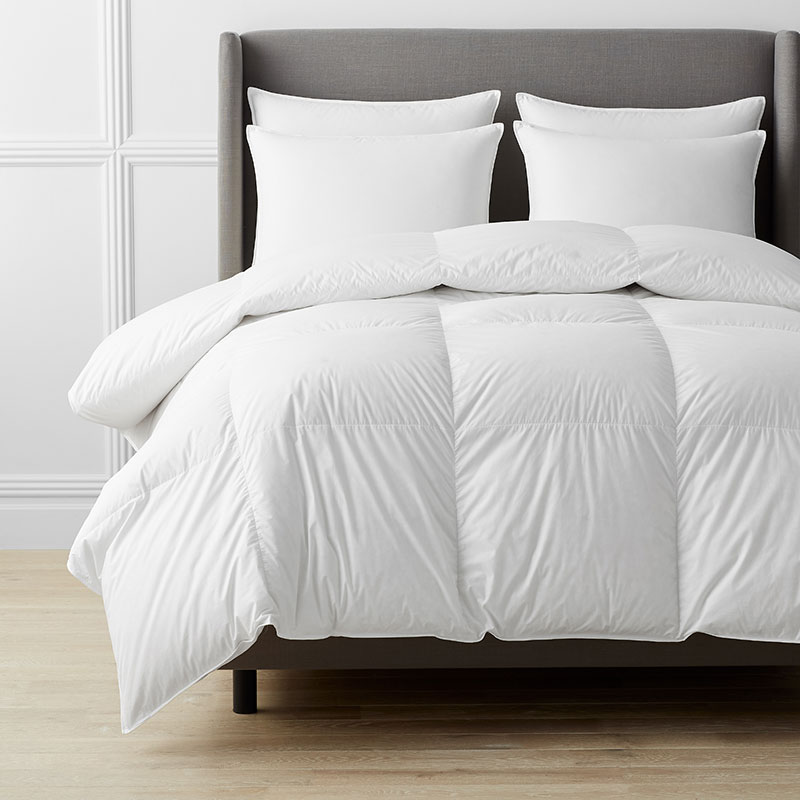
Luxurious Imperial German Batiste Down Comforter
The Imperial German Batiste is The Company Store's premium tier — it combines 800-fill-power Hungarian white goose down with an ultra-fine German batiste cotton shell, a construction choice that keeps the comforter remarkably lightweight while maximizing loft and warmth. This is a direct comparison point against the Matouk Chalet ($2,374), also at 800 fill power: the German batiste specification and Hungarian down sourcing are comparable in category, with a $675 price difference. For cold sleepers who want a heavyweight duvet at the top fill-power tier, this is the most technically specified option under $2,000 in this guide.
shop| Feature | Premium 3-in-1 Down Comforter | Imperial German Batiste Down Comforter |
|---|---|---|
| Price | $157.97 | $1,699 |
| Fill Type | RDS-certified ethically sourced down | 800-fill-power Hungarian white goose down |
| Shell | Not specified — confirm with retailer | Ultra-fine German batiste cotton |
| Best For | Versatile sleepers who want year-round adaptability at an accessible price | Cold sleepers wanting the highest fill power in a lightweight, ultra-fine shell |
| Value | Outstanding — real down with RDS certification under $160 | High investment; 800 fill power + German batiste is a premium specification |
The Verdict
The Premium 3-in-1 Down Comforter is the single most practical value pick across this entire guide — real, RDS-certified down, adaptable warmth levels, and a price well under $200. For shoppers who want real down without committing to a four-figure purchase, it's the clearest recommendation here. The Imperial German Batiste is for a different buyer entirely: one who has narrowed to 800-fill-power goose down, wants the airy lightness of German batiste cotton, and is comparing this directly against the Matouk Chalet. At $675 less than the Matouk with comparable specifications on paper, it warrants serious consideration at that tier. Browse the full range of home and garden picks on Chirpyest for more bedding recommendations across every budget.
Putting It All Together: Which Winter Comforter Is Right for You?
Across the twelve products compared in this guide, the pattern is consistent: goose down — particularly European or Hungarian white goose down at 650–800 fill power — delivers the most warmth per ounce and is the better choice for genuinely cold climates and cold sleepers. Synthetic down alternative comforters are the right call when allergies are a factor, when easy home laundering matters, or when budget is a firm constraint. They are not a compromise for mild temperatures — today's best-rated winter bedding in synthetic fill, like the Peacock Alley cluster-fiber duvet or the Riley Home microfiber with its 3-year guarantee, are credible cold-weather options.
Price ranges in this guide span from $149 (Kassatex down alternative) to $2,374 (Matouk Chalet), with the most notable value outlier being The Company Store's 3-in-1 at $157.97 — real down, ethical sourcing certification, and year-round adaptability at a price that undercuts every other real-down option by a wide margin. If you're also building out your sleep setup beyond the duvet, it's worth pairing your comforter choice with a quality mattress topper and considering whether a bedroom humidifier makes sense for your climate, since dry winter air can affect sleep comfort independently of bedding warmth.
Our overall recommendations across the guide: for pure cold-weather warmth at the most accessible real-down price, start with The Company Store's 3-in-1. For mid-range goose down duvets, the Garnet Hill Heirloom and Kassatex European White Goose Down are both well-positioned. For a hypoallergenic cold-weather duvet with solid brand backing, the Peacock Alley Down Alternative and Riley Home Down Alternative are the two strongest synthetic picks. And if the budget for 800-fill-power goose down is on the table, The Company Store's Imperial German Batiste offers the most detailed specification at that tier for under $2,000.
Frequently Asked Questions
What fill power should I look for in a winter down comforter?
For cold-weather use, look for a fill power of at least 600, with 700–800 being the range most associated with heavyweight warmth and lasting loft. Higher fill power means larger down clusters that trap more air — translating to more warmth per ounce and a lighter feel for the same insulation level. Among the products in this guide, the Matouk Chalet and The Company Store Imperial German Batiste both reach 800 fill power, while the Garnet Hill Heirloom and Matouk Valletto fall in the 650–700 range — all appropriate for genuinely cold climates.
Are down alternative comforters warm enough for freezing temperatures?
Yes, provided you select one specifically rated as "winter weight" rather than all-season or lightweight. Synthetic down alternative comforters use engineered microfiber or cluster-fiber fills that can provide substantial insulation — the Garnet Hill Signature Down-Alternative Duvet and Peacock Alley's Hypoallergenic Down Alternative Duvet are both described as winter-weight products. The practical tradeoff is that they tend to be heavier than a goose down duvet delivering the same warmth, and some compress faster with repeated use.
What is tog rating and should it affect my buying decision?
Tog rating is a European measure of thermal resistance — how effectively a duvet retains heat. A higher tog number means warmer. For cold-weather sleeping, a tog rating of 10.5–13.5 is typically recommended; above 13.5 is considered suitable for very cold rooms or cold sleepers. Most U.S. retailers in this guide use warmth descriptors ("winter weight," "heavy warmth") or fill power numbers rather than tog ratings, so if a product doesn't list a tog figure, look for explicit warmth weight labeling or contact the retailer directly to confirm suitability for your climate.
Can I machine wash a down or down alternative comforter?
Down alternative comforters — including those from Kassatex, Riley Home, and Garnet Hill — are generally machine washable, provided you use a large-capacity machine and follow care instructions. Genuine goose down comforters typically require professional laundering or a commercial washer, as home machines are often too small and agitation can damage down clusters and shell fabric. If home laundering is important to you, down alternative is the more practical choice, and it's worth confirming the specific care instructions for any product before purchasing.